
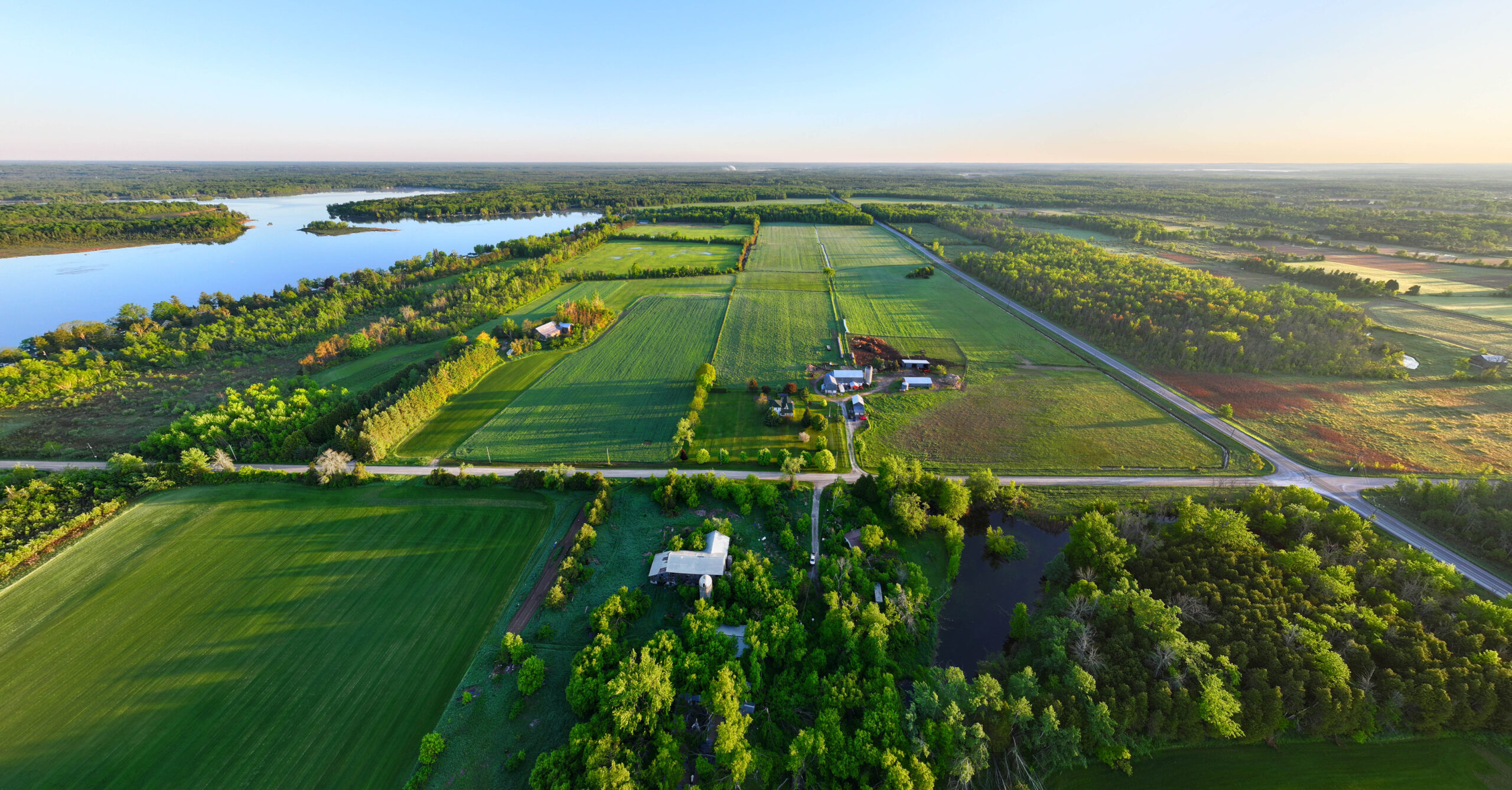
For Dr. Leith Deacon, improving rural well-being starts with asking the right questions. Data collection systems largely geared towards urban populations miss the unique challenges and needs of rural communities, which remain underrepresented within them.
“As a result, rural communities can become statistically invisible. When the data isn’t there, it’s harder to demonstrate need, which means fewer resources and less policy attention—and that cycle tends to reinforce itself,” says Dr. Deacon, McCall MacBain Research Chair in Resilient Rural Communities and Associate Professor, Rural Planning and Development at the University of Guelph.
Growing up in northern Ontario, Dr. Deacon understood early how data inequity can limit access and opportunities for rural communities. But the gaps became more obvious to him during the pandemic, when many public health measures overlooked rural realities.
“Many of the supports introduced simply didn’t translate to rural contexts—things like e-learning in areas without reliable broadband, or public health messaging that assumed close-knit neighbourhoods when, in reality, people can be quite geographically isolated,” he says.
This prompted his study to measure the impact of the pandemic on individual well-being and health across agro-rural communities of Huron and Perth. The results of this small pilot study led to mighty outcomes, catalyzing deeper research, informing regional community planning efforts, and helping resource-strapped local services make a case for larger government investment. As importantly, it also demonstrated the need for —and benefits of —a bigger, more consistent effort to study rural and underserved populations.
HEARing rural communities
With investment from the McCall MacBain Foundation, Dr. Deacon and the University of Guelph launched the HEAR (Health, Economy, and Adaptation in Rural communities) Initiative in 2025.
HEAR is envisioned as a longitudinal, community-engaged research platform designed to address persistent data gaps affecting rural and other underserved communities across Canada. The initiative will be launched in Ontario with two biennial surveys conducted over six years across rural and remote communities on three interconnected areas critical for strengthening rural resilience: health, economics, and adaptation. The first is a large-scale, paper-based household survey designed to provide broad coverage with representation across different types of communities, and the second is a digital individual-level survey that allows participants to share their personal experiences with access to care, employment challenges, and barriers to services. Combined, the surveys will enable researchers to build a dataset that captures both the household context and individual experiences.
HEAR aims to cover 20% of the rural and remote households across the province (about 280,000 homes), making it one of the largest coordinated efforts to collect rural well-being data. A larger dataset will not just deepen understanding of these communities as a whole but also underscore the local differences and regional variances within them, informing more targeted, measurable policymaking, as well as empowering communities to participate in decision-making around issues that impact their lives.
“What makes HEAR different from many existing surveys is that it’s built specifically for rural contexts, rather than adapting tools designed for urban populations. It recognizes that rural experiences are distinct and need to be measured in ways that actually reflect those realities,” explains Dr. Deacon.
To achieve this, the survey is built in collaboration with the communities it seeks to impact. The initiative is governed by an advisory committee of 15 members from diverse sectors –public health, development agencies, environment organizations, nonprofits – as well as from every part of the province. They are involved at each step of the process: co-designing the survey, aligning it to the lived realities and cultural contexts of diverse rural populations; ensuring meaningful participation through trust-building and exposure to local networks; and supporting data interpretation and dissemination, contextualizing results and driving community action. This participatory approach is key to ensuring that the data gathered is high-quality and impactful.
“It creates a sense of shared ownership. The data isn’t just being collected about communities—it’s being developed with them, which makes it far more meaningful and actionable. In that sense, collaboration isn’t just a nice-to-have—it’s what makes the data credible, relevant, and useful for decision-making,” says Dr. Deacon.
In addition, the initiative will provide scholarships for nine doctoral and post-graduate students focusing on rural development and planning to support the project, with the larger intention to identify, train, and mentor new talent in rural research.
From data to action
With the first survey ready and about to roll out, Dr. Deacon hopes it empowers governments to better understand regional nuances to design responsive programs while helping communities to access more resources, improve local planning, and use evidence to advocate for their well-being.
For that to happen, the University of Guelph will work towards translating the data into user-friendly, open-source tools and resources and building community capacity to drive meaningful action at the local and provincial level.
Dr. Deacon believes empowering communities and policymakers to use HEAR’s data and tools will shift the narrative, supporting equitable and effective outcomes for rural communities.
“Ultimately, all of this contributes to stronger resilience—because communities that are visible in the data are better equipped to respond to challenges, whether that’s a public health crisis, economic shifts, or long-term development planning,” he adds.
The HEAR Initiative is supported as part of our strategic focus on advancing evidence-based, well-being initiatives in our Founders’ hometowns. Read more about our giving in Huron County here.