
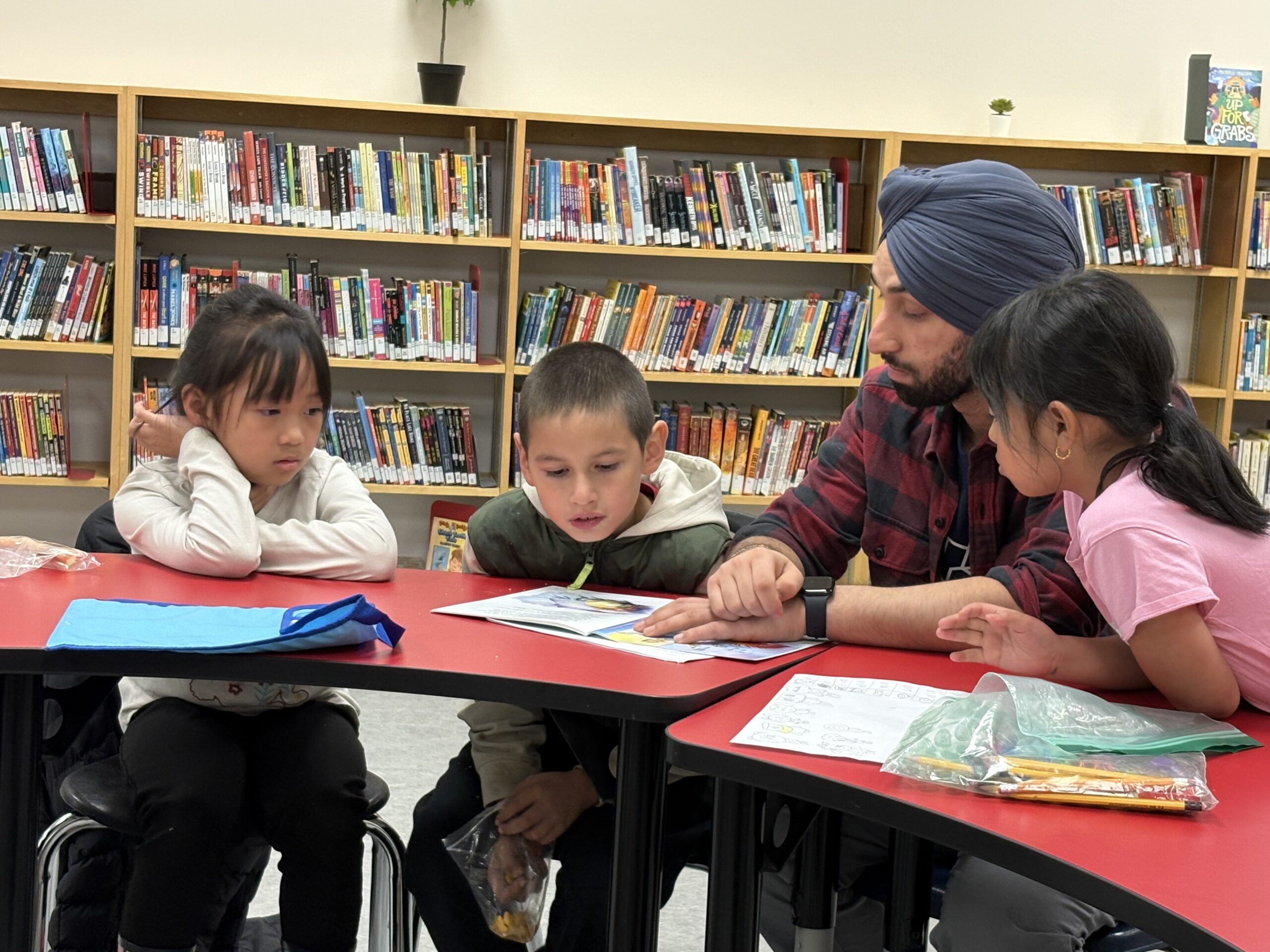
When given opportunities and supports, young people can be powerful partners in driving change. United for Literacy’s National Youth Mobilization Program is creating different pathways for youth to get involved in transforming the future of communities across Canada.
Formerly Frontier College, the organization has over a century of experience building and managing a nationwide volunteer network. Youth have been an essential part of that work, with nearly 70% of their current volunteers aged between 14 and 29. And, critically, those youth volunteers in turn are supported by a smaller number of paid youth Interns, many of whom have previously been volunteers themselves, who help recruit and manage other volunteers, improve program design, and bring in new skills and ideas. Stepping into an internship from a volunteer role provides a progression of responsibility, while maintaining youth at the centre of the organization’s work.
Youth have an enormous impact on program access, delivery, and outcomes, ensuring that we have the capacity to deliver free literacy programs to remote and underserved populations from coast to coast to coast.
– Mélanie Valcin, President and CEO, United for Literacy.
Young people as engaged partners
Together, youth volunteers and interns form part of United for Literacy’s National Youth Mobilization Program. The language matters: many youth have expressed that being part of the organization’s mission that is driving positive change is more resonant than being a volunteer or an intern, helping them see themselves as engaged partners.
“Interns are encouraged to bring their own perspectives and lived experiences to program design and delivery. Our programs are flexible and delivered according to community and learner needs, which means that we can easily incorporate interns’ contributions in real time,” says Mélanie.
Over the years, interns have enhanced programming by contributing their own ideas, including social events and wellness initiatives to improve volunteer recruitment and retention, new technologies such as a language translation app to improve accessibility for newcomers, and games and interactive elements to make learning fun.
While volunteer opportunities enable youth to contribute immediately to frontline service delivery, bringing literacy programs to their home communities, internship opportunities position them to gain a bigger picture of the work being done. Together, these experiences enable young people to wear different hats and contribute across a spectrum of tasks and roles.
“What I really appreciated about the internship is that it wasn’t very one-track. It was like you’re getting your feet wet, so to say, with a lot of different kinds of tasks, like volunteer management, facilitating training sessions, site visits, and program check-ins. And you’re getting it against the backdrop of a very established nonprofit organization,” says Chanelle Mendes, who started as a volunteer, worked as an intern, and is now a full-time staff member with United for Literacy.
Ultimately, this helps young people to gain confidence in themselves and their ability to make meaningful change in their communities.
Encouraging lifelong involvement
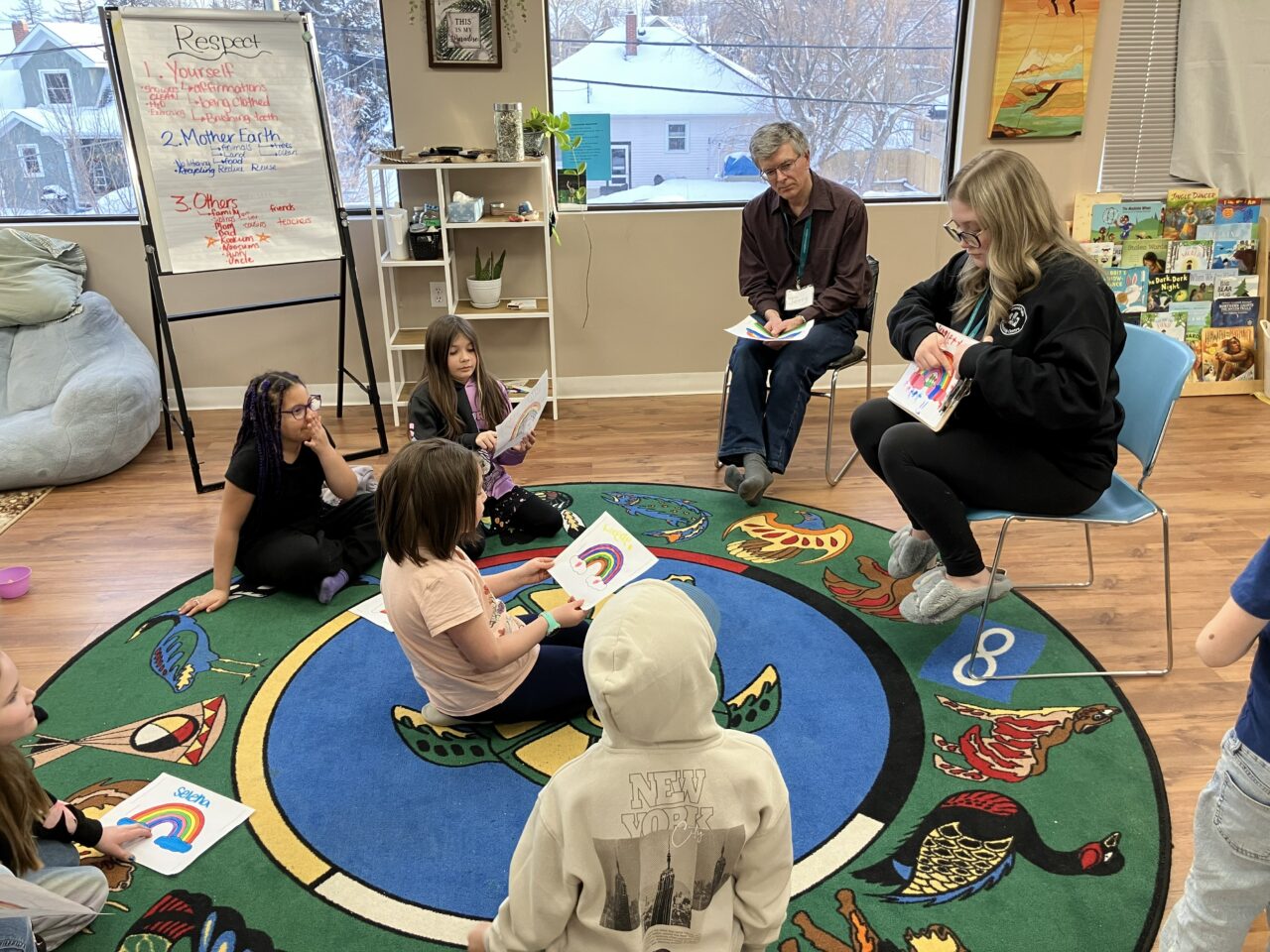
This early spark for community work can transform into lifelong involvement. Giving youth an early window into this work can help them imagine ways to continue contributing to the solution. This is especially important now as volunteerism rates continue to decline nationally.
For Campbell MacInnis, a student in education, the experience opened up a new career track. She first joined as a volunteer and later took on an internship with the prison literacy team, delivering literacy programs, developing learning materials, and understanding learners’ needs.
“Through this project and our institution visits, I was exposed to what education looks like within the corrections system. I had not seriously considered this non-traditional teaching role before. I was able to connect with current educators, and eventually I was offered the opportunity to teach within the corrections system.” She now works as a teacher with the Correctional Service of Canada.
For others like Tara Kim, a communications student, the experience reinforced her passion for using her skills to make a meaningful impact in her community.
“Seeing learners gain confidence and achieve their goals was incredibly rewarding. Personally, I had the privilege of working alongside the same learners for years [as a volunteer and as an intern]. I even got to see some of them go into high school! I hope to continue volunteering alongside my career once I’ve finished graduate school,” she says.
United for Literacy’s National Youth Mobilization Program has supported 162 youth interns and 4,500 volunteers serving 113,500 learners across Canada over the last 5 years.
Since 2020, the McCall MacBain Foundation has supported United for Literacy’s National Youth Mobilization Program as part of our strategic focus on building opportunities for leadership and growth for youth.