
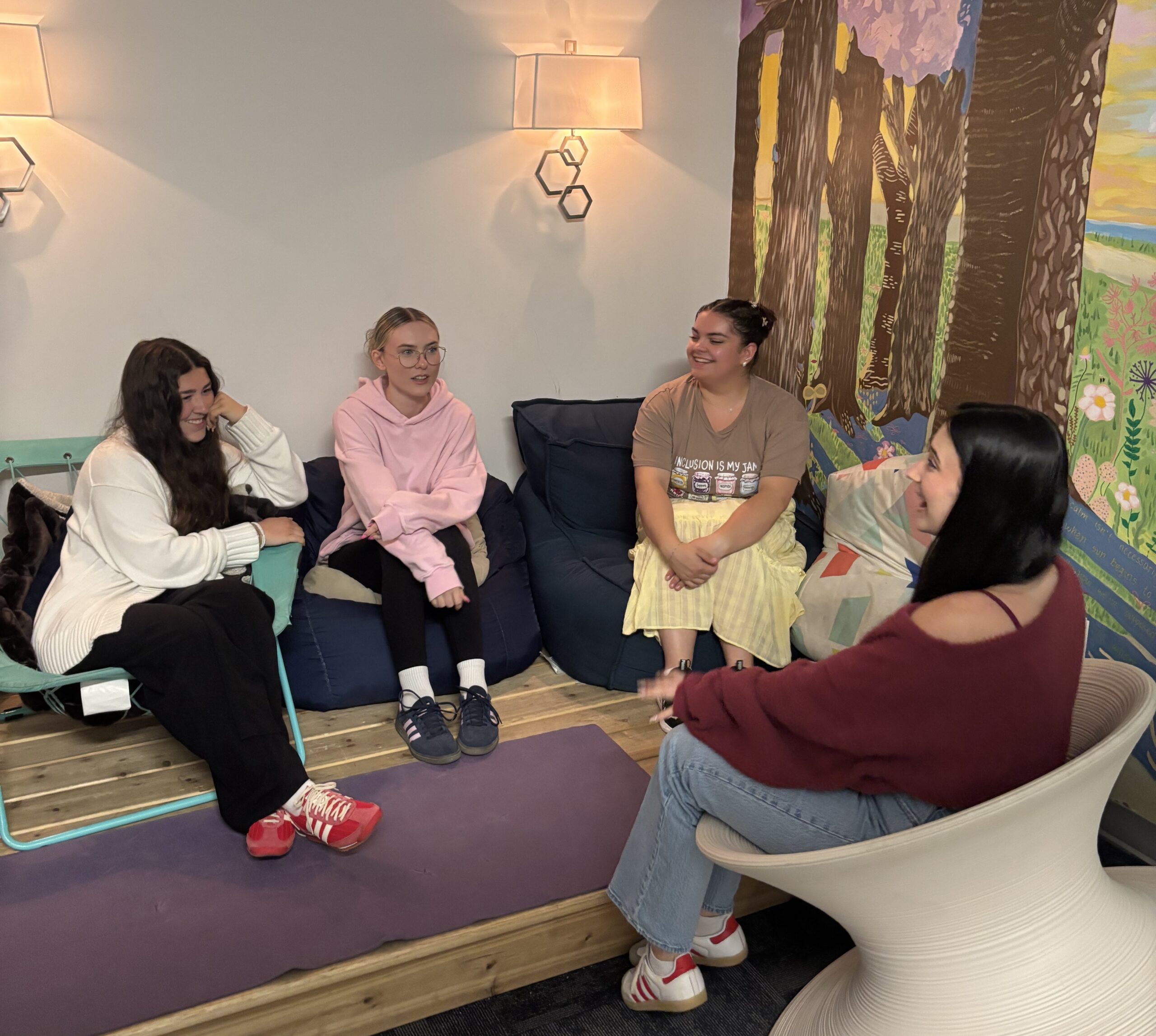
Long before a struggling young person decides to reach out for help, they must overcome many barriers: stigma, gender and cultural taboos, and limited awareness around how to get help.
Across Canada and globally, the Integrated Youth Services model brings together a range of services, spanning from mental health and substance use to employment and housing, under one roof, while also offering a safe space for youth to hang out, connect with peers, and build positive relationships. In Ontario, these youth-friendly spaces are called Youth Wellness Hubs Ontario (YWHO) and are present in 32 communities across the province.
Since opening their doors in 2019, YWHOs have seen a rapid increase in the number of visits, especially as youth mental health and well-being continue to decline across the country. One of the busiest is Wellington-Guelph, which saw over 36,000 visits in a single year, including a 50% increase in clinical needs. Staff were struggling to keep up, and nationwide shortages of healthcare workers made it difficult to recruit and retain talent.
Hubs are often competing with hospitals, schools, larger agencies, and private practice for the same talent. Moreover, retention is impacted by workload intensity, broader system pressures, and the demands of supporting youth and families who are often facing complex needs.
Jeff Hoffman, Executive Director, YWHO Wellington-Guelph.
This becomes more pronounced in rural and remote regions where the pool of available talent shrinks significantly compared to urban centers, impacting young people’s access to services.
An effort to build early pathways for talent
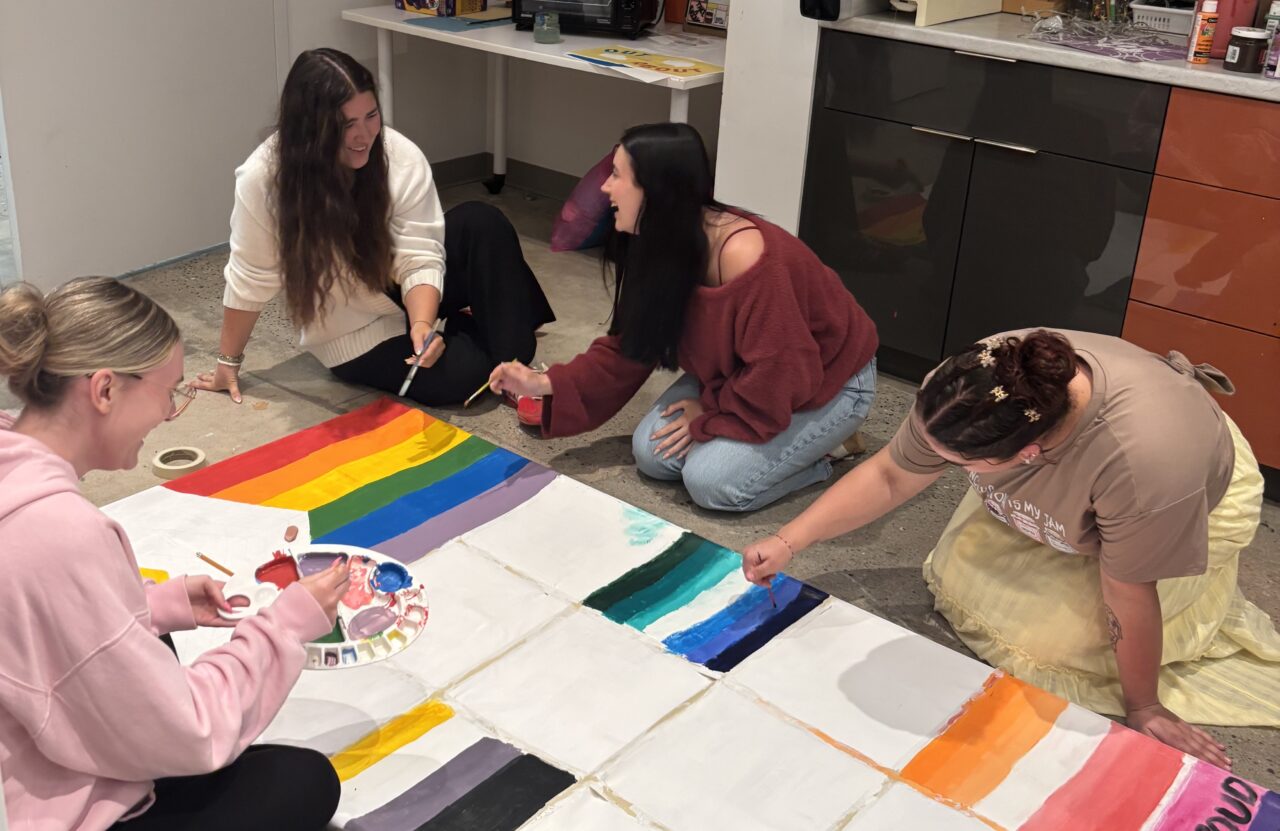
In 2024, with funding from the McCall MacBain Foundation, YWHO Wellington-Guelph set out to expand its student placement program, bringing in more post-secondary students to support staff capacity and gain experience in community-based youth-focused work. Over the next 1.5 years, they placed 52 students from 19 post-secondary institutions.
Through these placements, which typically span a couple of months, students gain hands-on experience working with youth. They learn about the demands of clinical work; how to lower barriers to access for young people; how to maintain privacy and confidentiality; how to build healthy boundaries; how to assist with documentation; and how to work within a multidisciplinary team.
Being a first point of contact meant really hearing people’s stories, building trust, and supporting youth in ways that felt practical and immediate, including helping connect them to appropriate resources and supports when they needed them.
Manny Singh, a student placement participant
The sites also offer opportunities for professional growth by encouraging students to participate in case consultation, program planning, reflective supervision, relevant training, and site-specific orientation to better understand the communities they’re working in. In turn, student interns help extend the sites’ capacity by shadowing the clinical team, building rapport with youth, supporting programming, and ensuring service flexibility, including extended evening and weekend hours.
“Placements also allow us to bring additional energy, skills, and capacity into the hubs – students often contribute new ideas, current learning from their academic programs, and strong interest in youth-centred practice,” says Jeff.
Noticing a gap in faith-based services, Manny helped design a multi-faith room to support inclusivity, privacy, and respect. He then connected with community-based faith leaders to gather resources and materials to facilitate an understanding of different religions.
“Taking initiative on a project that will have a lasting impact on youth strengthened my confidence in my ability to create positive change,” he says.
The experience also gives students a broader understanding of diverse career pathways within community organizations. Before joining YWHO, Charlotte Spicer, a psychology grad, believed her only option was to apply to a master’s program and then a PhD.
“I could’ve gone on to do a PhD without ever actually trying to have a difficult conversation with a youth. Just being in the field and learning from not only my coworkers at the Hub but also other community service providers about their work and backgrounds has greatly broadened my understanding – opening up new career paths,” explains Charlotte, who now wants to pursue a career in social work, where she can continue to work with youth.
Seeing themselves in youth-focused work over the long term is what YWHO hopes the placement experience will inspire in young people.
We hope students leave with a strong understanding of what effective community-based youth support can look like. Whether they stay with YWHO, join another community agency, work in schools, health care, social services, or clinical practice, we want them to carry forward a youth-centred, collaborative approach.
Jeff Hoffman
A talent pipeline for hubs across Ontario
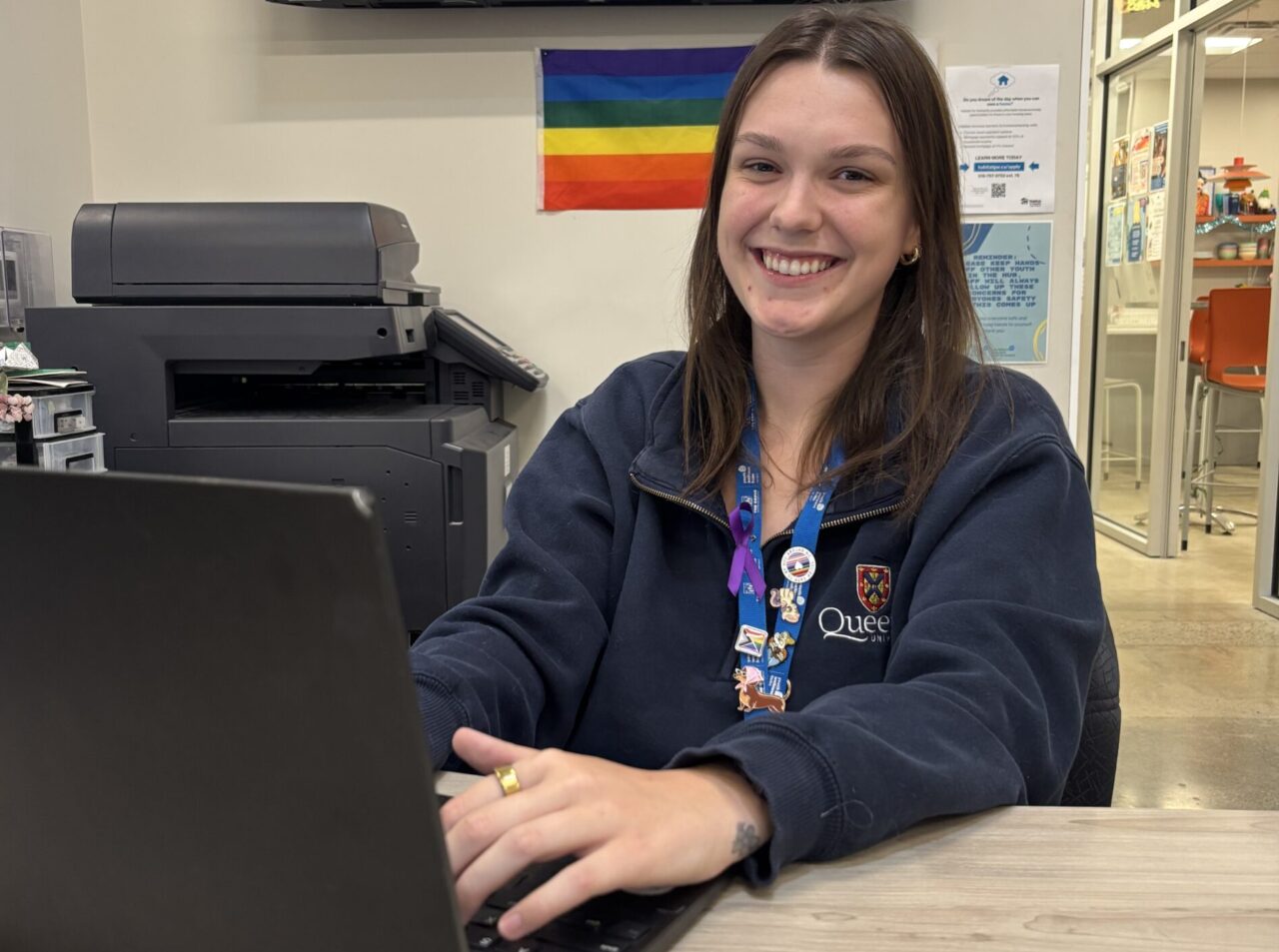
For many like Charlotte, the placement has led to long-term opportunities at YWHO. She now works as a Youth Wellness Coordinator, providing clinical support.
This has been an incredible opportunity in several ways. Professionally, I’ve been able to take on more responsibility and access new learning opportunities – from formal training and conferences to more casual conversations and collaboration with professionals I wouldn’t otherwise have met. I also recognize that it’s the kind of opportunity I might have waited years for elsewhere.
Charlotte Spicer, Student Placement Participant
So far, 10 students have found full-time roles at the Hub after their placements ended.
Having seen some initial success, YWHO Wellington-Guelph is ready to share its learnings. Through new funding from the McCall MacBain Foundation, the Center for Addiction and Mental Health (CAMH), the provincial backbone organization for YWHO, will be working to build a strong evidence base to standardize the student placement model across other hubs, evaluate different approaches, connect hubs with post-secondaries, and track data and outcomes.
“One key lesson is that student placements can be treated as a long-term workforce development strategy, not just a short-term capacity solution,” says Jeff. “Especially in rural and smaller communities, placements can help expose students to the strengths and opportunities of working outside larger urban centres. In a sector facing ongoing workforce pressures, this has been an effective way for us to build talent locally.”
The YWHO student placement program and its expansion are funded through McCall MacBain Foundation’s strategic focus on youth well-being and mental health. Learn more here.